36.5 million people played pickleball in the last year alone. That’s a staggering number. It represents a 223% increase in participation over just three years, proving this isn’t a passing fad. If you’ve spent any time searching for pickleball articles lately, you’ve seen the headlines. This sport blends elements of tennis, badminton, and table tennis into a high-energy social experience. It’s officially known as America’s newest racquet sport, and it’s taking over suburban cul-de-sacs and urban parks alike. You’re likely here because you want to know why everyone is obsessed. But it’s about more than just a plastic ball. It’s about a community that’s growing faster than the infrastructure can keep up with.
Why Is Pickleball Called America’s Newest Racquet Sport?
Pickleball isn’t actually new. It was invented in 1965 by Joel Pritchard and his friends on Bainbridge Island. They were bored and looking for a way to entertain their families. But the sport didn’t hit the mainstream media until 1976. That’s when Tennis Magazine published a landmark piece. They were the first to label it America’s newest racquet sport in print. That title stuck for decades. It’s now part of the game’s DNA. And then there’s the story of the name itself. Many people believe the game was named after the Pritchard family’s dog, Pickles. They claim the dog would chase the ball and run away with it during matches. But historical accounts from sources like Onix Pickleball suggest a different reality. The dog was actually named after the game was already established. The name likely came from the concept of a pickle boat in rowing. This refers to a crew thrown together from the leftovers of other boats. It’s a fitting metaphor for a sport that borrows its rules from three different disciplines. You’re playing on a badminton-sized court with a modified tennis net and oversized ping-pong paddles. It’s a beautiful, athletic collage.
What Makes Pickleball the Fastest Growing Sport in America?
Growth is explosive. Recent data from 2020mag indicates that pickleball is currently the fastest growing sports in America. It has surpassed almost every other recreational activity in year-over-year adoption. Only biking and running boast higher total participation rates across the country. But those are solitary pursuits. Pickleball is inherently social. You can’t play it alone. The court is small, which means you’re always close enough to your opponents to hold a conversation. This accessibility is the primary driver of its success. You don’t need years of expensive lessons to get a rally going. Most beginners can play a functional game within thirty minutes of picking up a paddle. And because the court is a third the size of a tennis court, there’s less ground to cover. This makes it a multi-generational game where grandkids can actually compete with their grandparents. It’s a rare bridge between age groups. But don’t let the small court fool you. The game becomes incredibly fast and strategic at higher levels. It’s easy to learn but nearly impossible to fully master. That’s the hook that keeps people coming back every weekend.
What Are the Health and Cognitive Benefits of Pickleball for Older Adults?
Seniors are the heart of the sport. Research published in the Human Kinetics journal highlights significant cognitive benefits of pickleball for older adults. It isn’t just about the heart rate. The game requires rapid decision-making and hand-eye coordination. You have to track a perforated ball while positioning your body and communicating with a partner. This mental load helps maintain neural pathways. It’s a workout for the brain and the body simultaneously. Beyond the mental perks, the pickleball health benefits are well-documented. It’s one of the best low impact sports for longevity because it provides a cardiovascular workout without the extreme joint stress of long-distance running. You get the movement you need without the recovery time that usually follows high-impact exercise. It keeps the heart healthy and the joints mobile. And the social aspect fights off the isolation that often affects retirees. You’re part of a tribe. You have a reason to get out of the house and sweat.
Pickleball Injury Prevention for Seniors
Safety is a priority. While the game is low-impact, pickleball injury prevention for seniors is a topic you must take seriously. Common issues include Achilles tendon strains and wrist fractures from falls. You should always start with a dynamic warm-up to get blood flowing to the muscles. Static stretching before a match is actually counterproductive. Focus on leg swings and arm circles instead. Proper footwear is the most important gear investment you’ll make. Don’t wear running shoes on a pickleball court. Running shoes are designed for forward motion and lack the lateral support needed for side-to-side court movement. You need a dedicated court shoe with a flat, grippy sole. This prevents the “ankle roll” that leads to many emergency room visits. Also, learn to never back up toward the baseline to chase a lob. That’s how most falls happen. Turn around and run forward instead. It’s a simple habit that saves lives.
How Is Pickleball vs Tennis Court Etiquette Different?
Tension is real. As the sport grows, the debate over pickleball vs tennis court etiquette has intensified in many communities. Tennis players often complain about the noise. The “pop” of a pickleball paddle is significantly louder and higher-pitched than the “thud” of a tennis racquet. This can be distracting for those on adjacent courts. Then there’s the issue of court-sharing. Many public parks are converting tennis courts into multiple pickleball zones. This leads to crowded areas and overlapping boundaries. You should always be mindful of your surroundings. Don’t walk behind a tennis match while a point is in progress. And keep your volume at a respectful level. Some players have started bringing Bluetooth speakers to the court, which is a major point of contention in pickleball articles and forums. Unless everyone on the surrounding courts agrees, leave the music at home. Respect the space. It’s the only way the two sports can coexist in public parks. If a ball rolls onto another court, wait for their point to end before asking for it back. Simple manners go a long way in keeping the peace.
How to Build a Pickleball Court on a Budget?
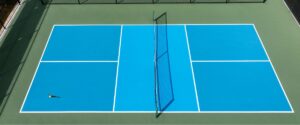
You can play at home. If you’re tired of waiting for a public spot, learning how to build a pickleball court on a budget is a great project. You don’t need a professional construction crew to get started. A standard driveway is often large enough for a regulation court, which measures 20 by 44 feet. You can buy a temporary net system for under two hundred dollars. These nets are lightweight and can be set up or taken down in five minutes. For the lines, skip the permanent paint at first. Use specialized floor tape or even sidewalk chalk to mark the boundaries. This allows you to test the layout before committing to a permanent change. If you have an old, cracked tennis court nearby, you can often fit four pickleball courts into that single space. Use a pressure washer to clean the surface first. Then apply a DIY acrylic coating to fill in small cracks. It’s a cost-effective way to create a private sanctuary for your games. You’ll save thousands of dollars by doing the labor yourself. And your neighbors will probably want to join in once they see it.
Advancements in Pickleball Paddle Technology Trends
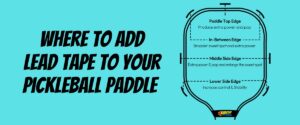
Gear is evolving fast. Keeping up with pickleball paddle technology trends is essential if you want to stay competitive. In the early days, paddles were just heavy slabs of wood. Now, they’re engineered marvels. Most modern high-end paddles use a polymer honeycomb core. This provides a “soft” feel that’s perfect for the dink game. But the real innovation is in the face materials. Carbon fiber and T700 Raw Carbon are the gold standards right now. These materials offer incredible durability and a massive sweet spot. Manufacturers are also adding “grit” to the surface using spray-on textures or peel-ply layers. This texture allows players to put massive amounts of spin on the ball. You can make the ball dive or jump in ways that were impossible five years ago. Look for “thermoformed” paddles if you want maximum power. These are made using heat and pressure to create a single-piece construction. They’re stiffer and more responsive than traditional “sandwich” style paddles. Your choice of gear should match your playstyle. Don’t just buy the most expensive option. Test a few different weights to see what feels natural in your hand.
Where Can You Find Indoor Pickleball Facilities and Strategy Guides?
Resources are everywhere. If you want to improve, you need to find indoor pickleball facilities that offer year-round play. Playing indoors eliminates the wind factor, which is the biggest enemy of a plastic ball. You can find a massive directory of places to play on Pickleball.com. They list everything from dedicated luxury clubs to local YMCA gyms. This site is also a hub for pickleball strategy guides that can take your game to the next level. You should focus your study on the “kitchen” or the Non-Volley Zone. This is the seven-foot area near the net where the game is won or lost. Most beginners try to hit the ball as hard as they can. That’s a mistake. The best players use the “dink” shot. This is a soft, controlled hit that lands in the opponent’s kitchen. It forces them to hit upward, which gives you the chance to smash the ball down. Mastering the third-shot drop is another crucial skill. This is a soft shot from the baseline that allows you and your partner to move up to the net safely. If you can control the net, you control the match. Spend time watching professional matches online. You’ll see that the fastest players are often the ones who slow the game down the most.
Start Your Pickleball Journey Today
Pickleball is a life-changer. It’s more than a game. It’s a way to stay active, meet new people, and challenge yourself every day. You’ve seen the data on growth and the incredible pickleball health benefits for your mind and body. There’s a reason it’s the fastest growing sport in America. It’s fun. It’s addictive. And it’s waiting for you. Don’t worry about being “good” right away. Everyone on the court was a beginner once. The community is famously welcoming to newcomers. You just need a pair of court shoes and a willing attitude. Go find a local club or a public park this weekend. Grab a paddle and ask to join the next rotation. You’ll find that the “pop” of the ball is the sound of a new obsession starting. Your body will thank you for the movement. Your social life will thank you for the new friends. It’s time to get off the sidelines and into the kitchen. Start your journey now. You won’t regret it.