
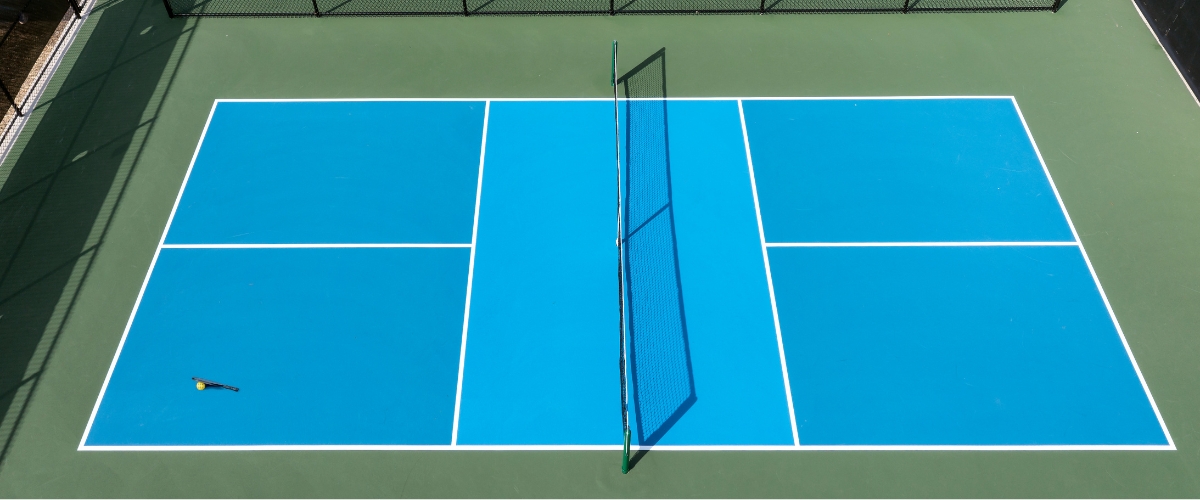
Five years ago, most homeowners viewed a backyard tennis court as the ultimate luxury. Today, that same space is being ripped up to make room for a professional pickleball court. The shift isn’t just a trend. It’s a movement. While multi-use surfaces offer some flexibility, they often fail to provide the consistent bounce and specialized texture that serious players crave. Investing in a dedicated space ensures your 3rd shot drop lands exactly where you intended. It transforms a simple yard into a competitive hub. You aren’t just building a slab of concrete. You’re creating a sanctuary for the fastest growing sport in the country.
What are the Official Pickleball Court Dimensions?
Precision matters in this game. You can’t just eyeball the boundaries if you want a true competitive experience. According to USA Pickleball court specs, the standard pickleball dimensions for the playing area are 20 feet wide by 44 feet long. This applies to both pickleball rules doubles and singles play. It’s a tight space. This compact size is exactly why the game is so fast and social. But don’t make the mistake of only clearing 44 feet of land. You need more room. A total pickleball court footprint should ideally measure 30 feet by 60 feet. This extra space provides the necessary out-of-bounds area for players to chase down a deep pickleball slam or a wide around the post shot without hitting a fence. If you’re squeezed for space, you can shrink the envelope to 24 by 54 feet, but 30 by 60 is the gold standard for safety and comfort.
Understanding Pickleball Net Height and Placement
The net is the heart of the court. It dictates the physics of every dink you hit. For a pickleball court to meet regulation standards, the net must be hung at specific heights. It should stand 36 inches high at the sidelines. However, it needs to drape slightly in the middle. The pickleball net height at the center must be exactly 34 inches. This slight dip is intentional. It rewards players who can accurately aim for the middle of the court during a heated rally. You’ll need a center strap to maintain this height during play. Without it, the tension will keep the net too high. That makes those low-percentage shots nearly impossible to clear.
What is the Average Backyard Pickleball Court Cost?
Building a private oasis isn’t cheap. It’s a major construction project. Most homeowners find that the backyard pickleball court cost falls between $20,000 and $50,000. Why the massive range? It starts with the dirt. Site preparation is the biggest variable in your budget. If your yard is sloped, you’ll spend thousands on grading and retaining walls before the first drop of concrete is poured. A standard four-inch reinforced concrete pad usually costs between $5,000 and $10,000. Then you have the surfacing. Professional acrylic coatings and line painting add another $4,000 to $8,000. Don’t forget the extras. Fencing, pickleball court lighting, and high-end net systems can easily push a basic build into the luxury category. It’s an investment that adds significant value to your property. But you must plan for these hidden costs early.
Which is the Best Pickleball Court Surface Material?
Your choice of material changes everything. It affects how the ball bounces and how your knees feel the next morning. Most professional pickleball courts near me use a 100 percent acrylic coating over concrete or asphalt. This surface provides the most consistent pickleball dimensions for ball response. It also offers a gritty texture that allows players to put spin on the ball. If you’re worried about joint impact, consider modular plastic tiles like Versacourt. These tiles feature a slight vertical give. This shock absorption is a lifesaver for older players. Asphalt is another option. It’s cheaper upfront than concrete. However, asphalt tends to soften in extreme heat and can develop dips over time. For a permanent pickleball court, concrete with a cushioned acrylic finish is almost always the superior choice.
When Should You Consider Pickleball Court Resurfacing?
Surfaces don’t last forever. The sun is your court’s worst enemy. Pickleball court resurfacing should typically happen every five to seven years. You’ll know it’s time when the colors begin to fade or the texture feels smooth. A smooth court is a dangerous court. It becomes slippery when wet and loses the grit needed for a proper dink. Look for small cracks. These are the first signs of structural fatigue. If you catch them early, a professional can fill them and apply a new wear layer. This prevents water from seeping into the base. Ignoring these signs leads to total base failure. That’s a much more expensive fix. Keep your court fresh to keep the play fast.
What Equipment is Necessary for a Professional Setup?
A slab of concrete is just a slab until you add the gear. You need the right tools to turn it into a pickleball court. Permanent setups require heavy-duty steel posts embedded in the ground. These posts must withstand hundreds of pounds of tension from the net cable. You also need a high-quality net made of braided polyester or nylon. Cheap nets won’t last a single season in the sun. For community centers, pickleball indoor courts often use different setups than outdoor ones. You might need sound-dampening panels if the court is near a residential area. The “pop” of the ball is iconic but can be loud. Proper equipment ensures the game stays fun for everyone involved.
Selecting Portable Pickleball Court Net Systems
You don’t always need a permanent fixture. Sometimes flexibility is king. Portable pickleball court net systems are perfect for multi-use driveways or school gyms. Look for a system with a wide steel base. This prevents the net from blowing over in a light breeze. The best portable units have wheels and a locking mechanism. You can set them up in under five minutes. They are great for pickleball classes near me where the space is shared with basketball or volleyball. Just make sure the net tension is adjustable. A sagging portable net ruins the integrity of the game. It makes practicing your pickleball serving rules or 3rd shot drop frustratingly inconsistent.
Using Court Line Tape for Pickleball Transitions
Converting a tennis court is a quick way to play. But you shouldn’t use permanent paint on a shared surface. Court line tape for pickleball is the ideal solution. This specialized tape sticks firmly to acrylic surfaces without leaving a sticky residue when removed. It’s much better than painter’s tape or chalk. Chalk washes away. Painter’s tape trips players. Use the tape to mark the pickleball kitchen and the sidelines accurately. Make sure the surface is bone dry before you apply it. If there’s any moisture, the tape will peel mid-game. It’s a simple way to bring pickleball near me to any flat surface in the neighborhood.
How Do You Choose Pickleball Court Lighting and Fencing?
The sun shouldn’t dictate when you play. Pickleball court lighting is essential for anyone with a busy schedule. LED systems are the modern standard. They provide instant brightness without the warm-up time of old metal halide bulbs. You want even light distribution across the entire pickleball court to avoid shadows. Shadows make the ball “jump” in your vision. Aim for at least 30 foot-candles of light for recreational play. Now, let’s talk about pickleball court fence options. A standard 10-foot chain link fence is common. However, many homeowners prefer an 8-foot vinyl-coated fence. It looks cleaner and creates a softer sound when balls hit it. Make sure the mesh is small enough that a pickleball can’t get stuck in the holes. This saves you from constant interruptions during a pickleball league match.
Ready to Build Your Custom Pickleball Court?
Building your own court is a massive undertaking. It’s also incredibly rewarding. You’ve learned about the pickleball dimensions and the importance of the pickleball kitchen. You know the costs and the materials. Now you need to take the next step. Don’t rush into a contract without a plan. Use a digital court designer to visualize your colors and layout. Check local zoning laws to ensure you can build close to your property line. If you’re not ready to build, you can always find pickleball lessons near me to sharpen your skills on public courts first. The community is growing every day. There are pickleball tournaments and pickleball brackets waiting for you to join. Want to stay ahead of the curve? Join our free newsletter today for the latest pickleball tips, gear reviews, and court maintenance hacks delivered straight to your inbox. Your journey to the perfect pickleball court starts with the right information. Let’s get playing.