
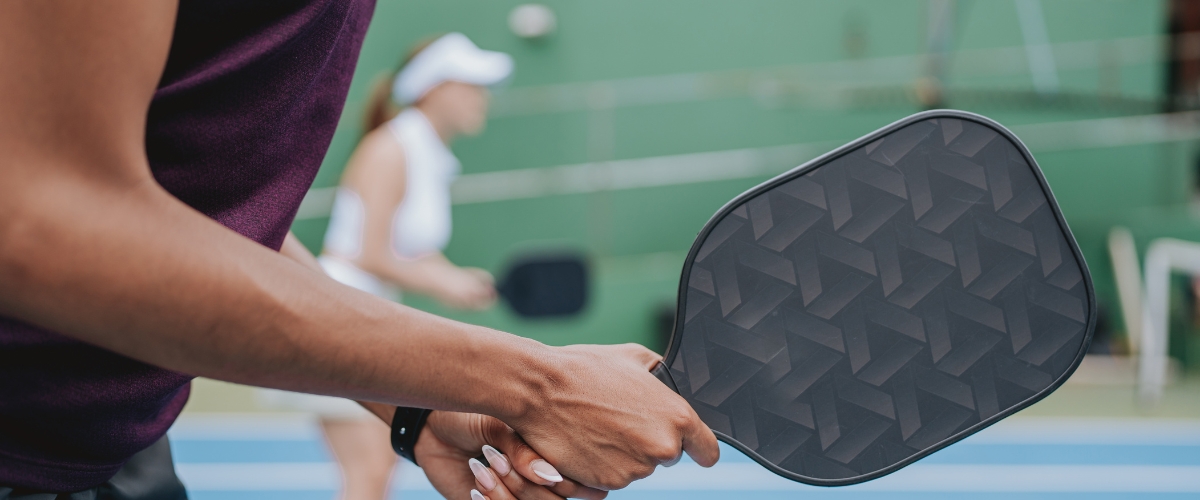
You are likely gripping your paddle too tight. This common mistake ruins the touch of even the most athletic players. Squeezing harder actually does the opposite of giving you control. Most players walk onto the court with white knuckles and wonder why their dinks fly out of bounds. If you want to master pickleball tips, you’ve to start with your hands. Improving your game requires a mix of soft touch and aggressive positioning. It’s about working smarter, not harder. But you must stay relaxed to win. Let’s look at how you can transform your performance on the court today.
Fundamental Pickleball Tips for Beginners
Starting out in this sport feels easy until you face someone who knows how to move. You need a solid foundation to avoid being a target for experienced players. Focus on your feet first. Many pickleball tips for beginners emphasize hitting the ball, but the magic happens before the paddle makes contact. You must arrive at the ball early. If you’re running while hitting, you’ll lose every time. Stop moving before you swing. This simple change creates a stable platform for every shot you take. It allows you to focus on the ball rather than your balance. You’ll find that your accuracy improves instantly.
Consistency beats power in the early stages of learning. You don’t need to smash the ball to win points. Most points in beginner matches end because someone hit the ball into the net. Don’t be that person. Aim for a high margin of error over the net. Give yourself space. High arcs are your friend when you’re learning the court dimensions. As you get comfortable, you can start lowering the trajectory. But for now, keep the ball in play. That’s the quickest way to win.
Mastering the Grip: Why Pressure Matters
Your grip is a volume knob. Turn it up too high and your shots become loud and uncontrollable. On a scale of one to ten, you should be at a four. Managing your Grip pressure is essential for success. Imagine you’re holding a bird. You want to keep it from flying away without crushing it. This relaxed state allows your wrist to act as a natural shock absorber. It’s essential for tips for pickleball success. When your grip is loose, you can feel the ball on the paddle face. This tactile feedback is what allows for delicate dinks and resets. If you squeeze too hard, the ball will trampoline off your paddle. You lose all sense of finesse. Try loosening your hand during your next warm up. You’ll feel the difference immediately.
And then there’s the mechanical side of the grip. Most pros recommend the Continental grip for versatility. It looks like you’re holding a hammer. This allows you to hit backhand vs forehand shots without shifting your hand. You won’t have time to change grips during a fast volley. Stick to one reliable hold. It simplifies your mental load during a point. You can focus on the opponent instead of your fingers. Consistency starts in the palm of your hand.
The Importance of the Ready Position
Never stand flat footed. You need to be an active participant in every second of the rally. The ready position means feet shoulder width apart and knees slightly bent. Your paddle should be up and out in front of your chest. This is one of the best pickleball tips for reacting to fast shots. If your paddle is down by your side, you’re already too late. You’ve to move it a long distance to reach a high ball. Keep it in the middle of your body. This allows you to protect both sides with minimal movement. You become a wall that’s hard to get past.
Weight distribution’s also a major factor. Keep your weight on the balls of your feet. This allows for an explosive split step as your opponent strikes the ball. A split step is a small hop that resets your balance. It ensures you can move in any direction instantly. Without it, you’re stuck in mud. Practice this timing during every drill. You want to land just as the opponent makes contact. It feels like a dance. But it’s actually high level physics.
Advanced Serving Tips and Techniques
The serve’s the only shot you fully control. Do not waste it. While USA Pickleball rules require an underhand motion, you can still generate significant pressure. Your goal isn’t always an ace. It’s to force a weak return. A weak return sets up your entire strategy for the point. Use your legs to drive the ball forward. Don’t just swing your arm. The power comes from the ground up. If you use your whole body, you get more depth with less effort. It’s more sustainable for long matches. You’ll stay fresher for the final sets.
Variety’s the secret sauce of a great server. If you hit the same serve every time, your opponent will get comfortable. They’ll start leaning into their return. Change your pace and your height. Toss the ball slightly differently to disguise your intent. These pickleball serve tips help keep the receiver guessing. If they’re guessing, they’re not attacking. You want them on their heels. A deep, high serve can be just as effective as a fast, low one. It all depends on the rhythm of the game. Keep them guessing always.
Targeting the Backhand and Deep Corners
Most players have a weaker backhand. It’s a biological reality for almost everyone on the court. Use this to your advantage by aiming your pickleball serving tips toward their non dominant side. Look for the shoulder furthest from the paddle. If you can jam them with a serve toward their hip, they won’t be able to extend their arm. This results in a short, popping return. That’s exactly what you want. It gives you a clear path to the kitchen line. You take control of the point immediately. It’s a simple tactical win.
Deep corners are another high value target. Pushing an opponent to the baseline corner opens up the rest of the court. They’ve to travel a longer distance to reach the kitchen. This gives you and your partner more time to set up. Aim for the back six inches of the court. But be careful. If you aim for the lines, you’ll eventually hit out. Aim for a target two feet inside the line. This gives you a safety buffer while still keeping the opponent deep. It’s about playing the percentages. Smart players win more than powerful ones.
Mastering the Kitchen: Dinking and Volleying
The kitchen’s where championships are won. Serious pickleball strategy tips always revolve around the Non-Volley Zone. You must get to this line as fast as possible. Once you’re there, the game changes from a power struggle to a chess match. Dinking’s the art of hitting the ball softly into the opponent’s kitchen. It requires patience. Many players get bored and try to speed up the ball too early. This is a mistake. You wait for the ball that sits up high. Until then, you keep the ball low and unattackable while perfecting each Dink shot you send over. You’re looking for a mistake.
Your footwork at the kitchen line must be precise. Avoid stepping into the kitchen unless the ball bounces there first. Stay an inch behind the line. Use a lateral shuffle to cover the width of the court. Do not cross your feet. Crossing your feet ties you up and ruins your balance. If you stay square to the net, you can reach more balls. You also stay ready for the inevitable “firefight” when someone speeds up the ball. Your hands must be fast. Your feet must be stable. This is the core of pickleball tips and tricks for high level play.
The Non-Volley Zone (NVZ) Strategy
The Non-Volley Zone (The Kitchen) is a sacred space. You cannot volley while standing inside it. This rule exists to prevent players from simply standing at the net and smashing everything. You must respect the line. Use your reach to take balls out of the air before they land in the kitchen. This is called taking it on the rise. It takes time away from your opponent. If you let every ball bounce, you give the other team more time to recover. Be aggressive with your positioning. Lean in. But keep your toes behind that line. It’s a delicate balance.
And you must communicate with your partner about who takes the middle. Usually, the player with their forehand in the middle takes those shots. This prevents paddle clashes and confusion. Clear communication’s a hallmark of a great dinking strategy. A perfect Dink shot requires you to stay calm under pressure. If you both go for the ball, you leave the sides open. If neither goes, the ball drops for a point. Talk to each other constantly. Even a simple “mine” or “yours” changes the dynamic. It builds trust. Trust leads to better results.
The 3rd Shot Drop: The Great Equalizer
The 3rd shot drop is the most important shot in the game. It’s the bridge that gets the serving team to the net. Your Third shot drop must be executed with precision. When you serve, the other team’s already at the kitchen. You’re stuck at the baseline. If you drive the ball hard, they’ll just block it back at your feet. Instead, you hit a soft, arching shot that lands in their kitchen. This forces them to hit upward. While the ball’s in the air, you run to the net. Now the court’s level. You’ve neutralized their advantage. It’s a difficult shot to master but essential for pickleball tips for intermediate players.
Practice this shot more than any other. It requires a lifting motion from the shoulder with very little wrist. You want the ball to peak on your side of the net and fall gracefully into theirs. If it’s too high, they’ll smash it. If it’s too low, it hits the net. You’re looking for the “Goldilocks” zone. Don’t get discouraged if you miss a few. Even pros struggle with the 3rd shot drop on windy days. Keep your eye on the ball. Follow through toward your target. It’ll eventually become muscle memory.
Intermediate Strategy: Positioning and Communication
At the intermediate level, the game becomes about court geometry. You aren’t just hitting the ball. You’re moving your opponents like puppets. If you hit a ball wide, you must move with your partner to cover the new angle. This is often called “moving on a string.” If one person moves, the other must follow. This prevents gaps from opening up in the middle of the court. Most points are lost because a team left a hole. Don’t leave holes. Cover the highest percentage shot first. Usually, that’s the down the line shot or the hard middle.
Communication needs to be specific. Don’t just shout “get it.” Use words like “switch” if you’re moving to your partner’s side. Call “out” early if a ball’s sailing long. This helps your partner avoid hitting a ball that was going to be a point anyway. Pickleball tips for teams always include a heavy dose of verbal cues. You’re a unit. Act like one. The more you talk, the less you’ve to guess. Guessing leads to errors. Information leads to wins.
Triangle Theory and Court Coverage
The triangle theory’s a pickleball strategy tips staple. It suggests that you should aim your shots to create difficult angles for the opponent. If you hit to the center, you limit their options. If you hit to the corners, you force them to move. However, when you hit to a corner, you open up a “line” for them to hit back. You must adjust your position to account for this. Imagine a triangle starting from the ball and extending to the two corners of your side. You and your partner should be positioned to bisect that angle. It sounds complex. But it’s just about staying between the ball and your goal.
And remember to respect the middle. The middle of the court’s the safest place to hit. There’s no net to go over on the sides and no sidelines to miss. It also creates confusion between partners. Who’s ball is it? That split second of hesitation’s all you need. Hit the middle often. It’s a high percentage play that yields high rewards. It’s one of the best pickleball tips for winning against aggressive teams. They want to play fast. You want to play smart.
Pickleball Tips for Seniors: Longevity and Safety
Pickleball’s a lifetime sport. But you’ve to protect your body to keep playing. For older players, pickleball tips for seniors focus on efficiency and injury prevention. Start with a proper warm up. Do not just walk onto the court and start smashing. Spend ten minutes stretching your calves and shoulders. Cold muscles snap. Warm muscles stretch. Use a paddle grip strength that doesn’t strain your elbow. If you feel pain, stop. There’s no prize for playing through a tear. Longevity’s the goal.
Footwork’s different for seniors. Instead of sprinting, focus on “small steps.” Large lunges are hard on the knees and hips. If you take many small steps, you stay in balance. You’re less likely to fall. Also, consider your equipment. A lighter paddle can reduce the strain on your mistake. Shoes with good lateral support are non negotiable. Do not wear running shoes on a pickleball court. You’ll roll an ankle. Get court shoes designed for side to side movement. Your joints will thank you.
Hydration’s your best friend. Even in cool weather, you lose fluids quickly. Drink water before you feel thirsty. Supplement with electrolytes if you’re playing for more than an hour. Fatigue leads to poor form. Poor form leads to injury. If you stay hydrated, your brain stays sharp. You’ll make better decisions in the third set. Smart tips for pickleball always include self care. You can’t win if you’re on the sidelines with an ice pack.
Common Mistakes to Avoid on the Court
The biggest mistake is “creeping.” This happens when you stand in “no man’s land.” This is the area between the baseline and the kitchen, often referred to as the Transition zone by coaches and pros. If you stand here, the ball’ll be hit at your feet. You can’t volley it and you can’t hit a groundstroke. You’re a sitting duck. Either stay back or get all the way to the line. Never hang out in the middle. It’s a death trap for your rating. Move with purpose. If you decide to go to the net, go fast. Don’t hesitate.
Another error’s overhitting. You do not need to kill every ball. If you try to hit at 100 percent power, your accuracy drops to zero. Hit at 70 percent. This gives you control and keeps the ball in play. Let the paddle do the work. Most modern paddles are designed to generate pop without a massive swing. Keep your backswing short. A long backswing’s a “tell” for your opponent. They’ll know exactly where you’re hitting. Keep it compact. Keep it secret.
Finally, stop looking at your own shots. Many players hit a ball and then stand still to admire it. By the time they realize the opponent returned it, it’s too late. Hit the ball and immediately prepare for the next one. The rally isn’t over until the ball bounces twice or hits the net. Stay in the point mentally. This focus is what separates the pros from the amateurs. It’s a simple habit. But it makes a world of difference. Always be ready for the “one more shot.”
Frequently Asked Questions
Q: What are the 5 P’s of pickleball?
The 5 P’s stand for Preparation, Proximity, Patience, Placement, and Power. Preparation involves having your paddle ready and your feet set before the ball arrives. Proximity refers to getting to the kitchen line as quickly as possible to control the court. Patience’s the ability to sustain a long dink rally without forcing a risky shot. Placement means aiming for the opponent’s feet or weak backhand rather than just hitting hard. Power’s the final element, used only when you’ve a clear opportunity to put the ball away.
Q: How can I improve my pickleball serve quickly?
The fastest way to improve your serve is to focus on depth rather than speed. Aim for the back third of the service box to keep your opponent pinned to the baseline. Use a consistent pre-serve routine to settle your nerves and focus your aim. Ensure you’re hitting the ball with an upward arc to clear the net with plenty of room. Practice your pickleball serve tips by hitting buckets of balls alone to build muscle memory. Consistency’s more intimidating to an opponent than a fast serve that frequently goes out.
Q: What is the best way to get better at pickleball?
Drilling’s significantly more effective than just playing games. Spend time practicing specific shots like the 3rd shot drop or cross court dinks repeatedly. This builds the “touch” required for high level play that you cannot get from chaotic game situations. Watching professional matches can also help you understand pickleball strategy tips and court positioning. Record yourself playing to identify movement errors or bad habits you might not notice in the moment. Finally, play with people who’re slightly better than you to push your limits.
Q: Is pickleball good for osteoporosis?
Pickleball’s often recommended as a weight bearing exercise that can help maintain bone density. The lateral movements and constant stepping provide the kind of impact that encourages bone growth without being as high stress as distance running. However, you must be careful about falls which are a risk for those with brittle bones. Always consult with a doctor before starting a new physical regimen. Using proper footwear and focusing on balance can make it a safe and effective way to stay active. It also provides a social outlet which’s great for overall health.
Q: What are the three mistakes in pickleball?
The three most common mistakes are standing in no man’s land, having too much backswing, and failing to communicate with your partner. Standing between the baseline and the kitchen makes you vulnerable to shots at your feet. A large backswing takes too much time and makes your shots unpredictable and easy for opponents to read. Lack of communication leads to “middle” shots being missed or partners colliding on the court. Avoiding these three errors will immediately improve your win rate and make you a better teammate. Focus on one at a time until they’re corrected.
Mastering the game takes time and deliberate practice. You won’t become a pro overnight. But by applying these pickleball tips, you’ll see steady progress. Focus on your grip and your kitchen play first. Those’re the areas where the biggest gains are made. Stay patient during rallies and wait for your opening. Most importantly, keep having fun on the court. This is a social sport designed for enjoyment. If you’re smiling, you’re already winning. Now get out there and start dinking.